12 Types of Concrete Finishes for Driveways, Patios & More
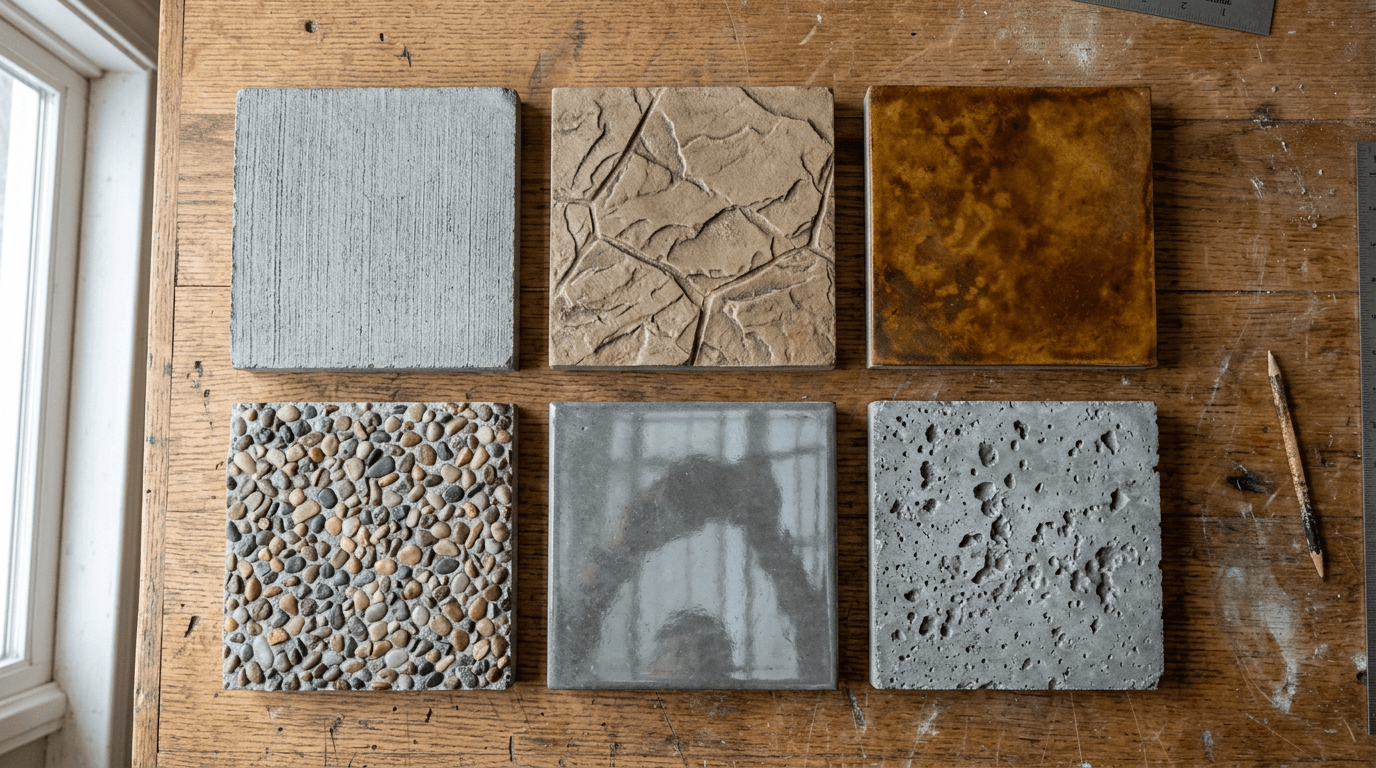
Illustrative image of concrete finish samples — not a completed High Plains project.
Concrete doesn't have to be plain gray. The way a slab is finished in the last hour of the pour — or treated after it cures — can completely change how it looks, how it feels underfoot, how much traction it has, how much maintenance it needs and what it costs.
Choosing the right finish comes down to three questions: how the concrete will be used, the look you want, and how it will hold up to Colorado's climate. Homeowners in Castle Rock, Parker, Highlands Ranch and across the Front Range deal with snow, ice, deicing chemicals and dozens of freeze-thaw cycles each winter, so a finish that works well in Arizona may not be the best fit here.
This guide walks through 12 common concrete finishes, compares them side by side and explains which tend to work best for driveways, patios, walkways, interior floors and pool decks. Not every finish here is one High Plains installs — the goal is to help you compare your options before you talk to a contractor.
Explore 12 Popular Concrete Finishes
- 1. Broom-Finished Concrete
- 2. Stamped Concrete
- 3. Stained Concrete
- 4. Polished Concrete
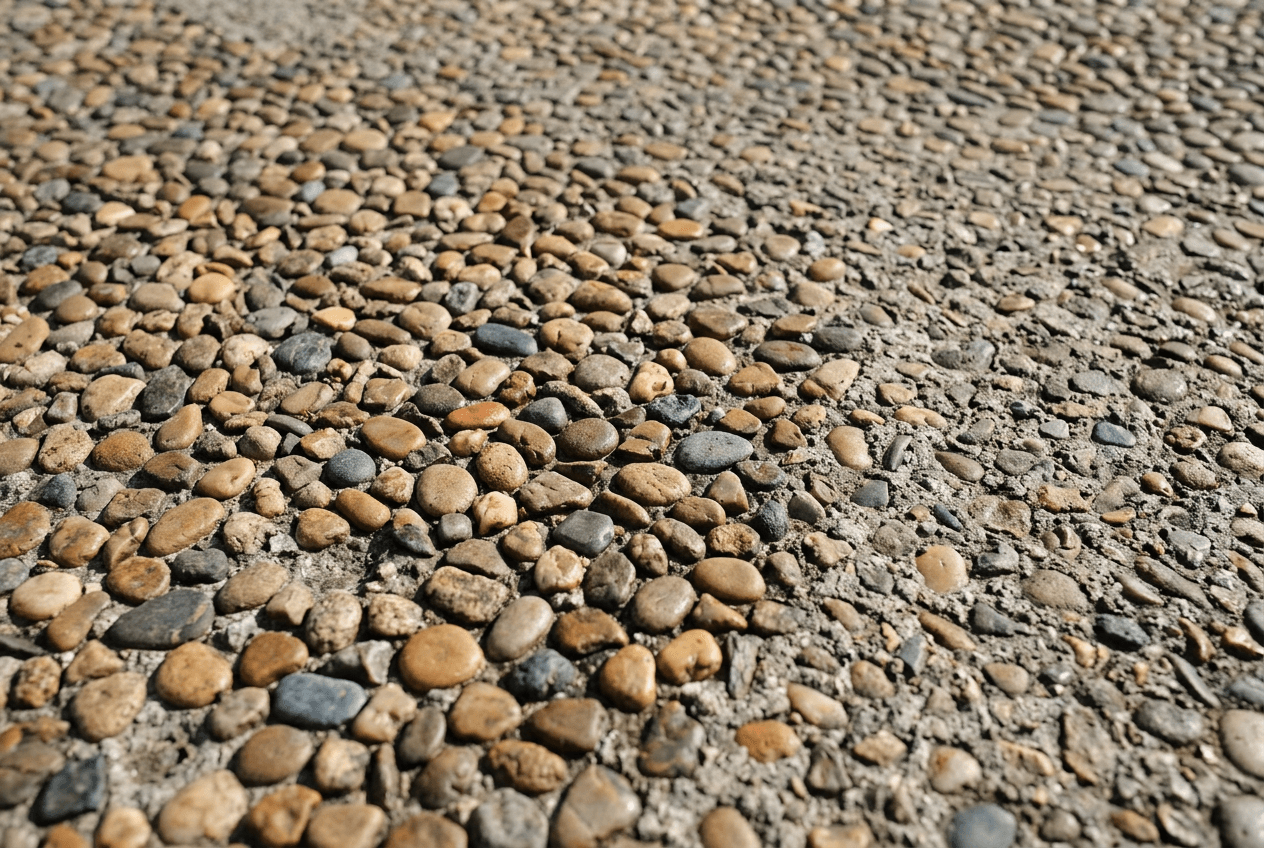
- 5. Exposed Aggregate Concrete
- 6. Smooth Trowel-Finished Concrete
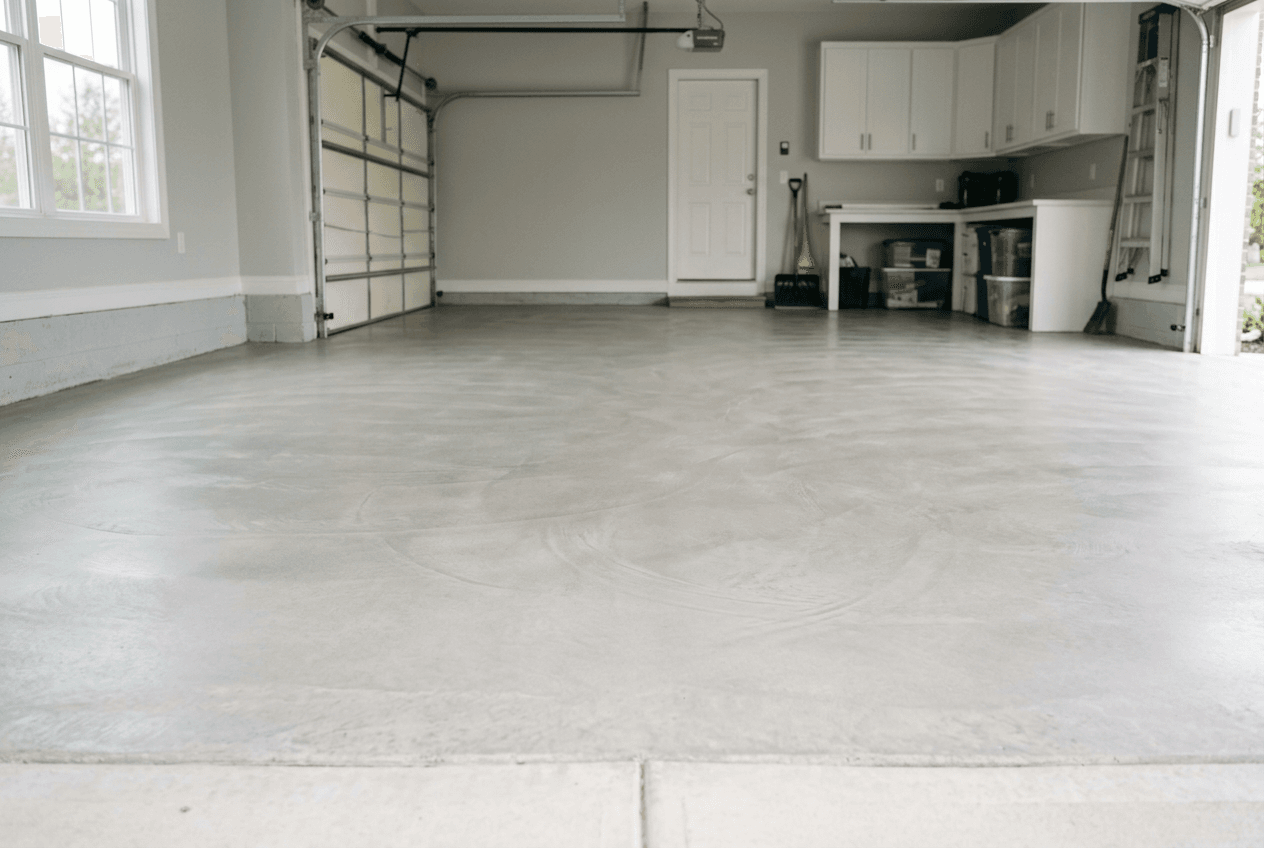
- 7. Salt-Finished Concrete
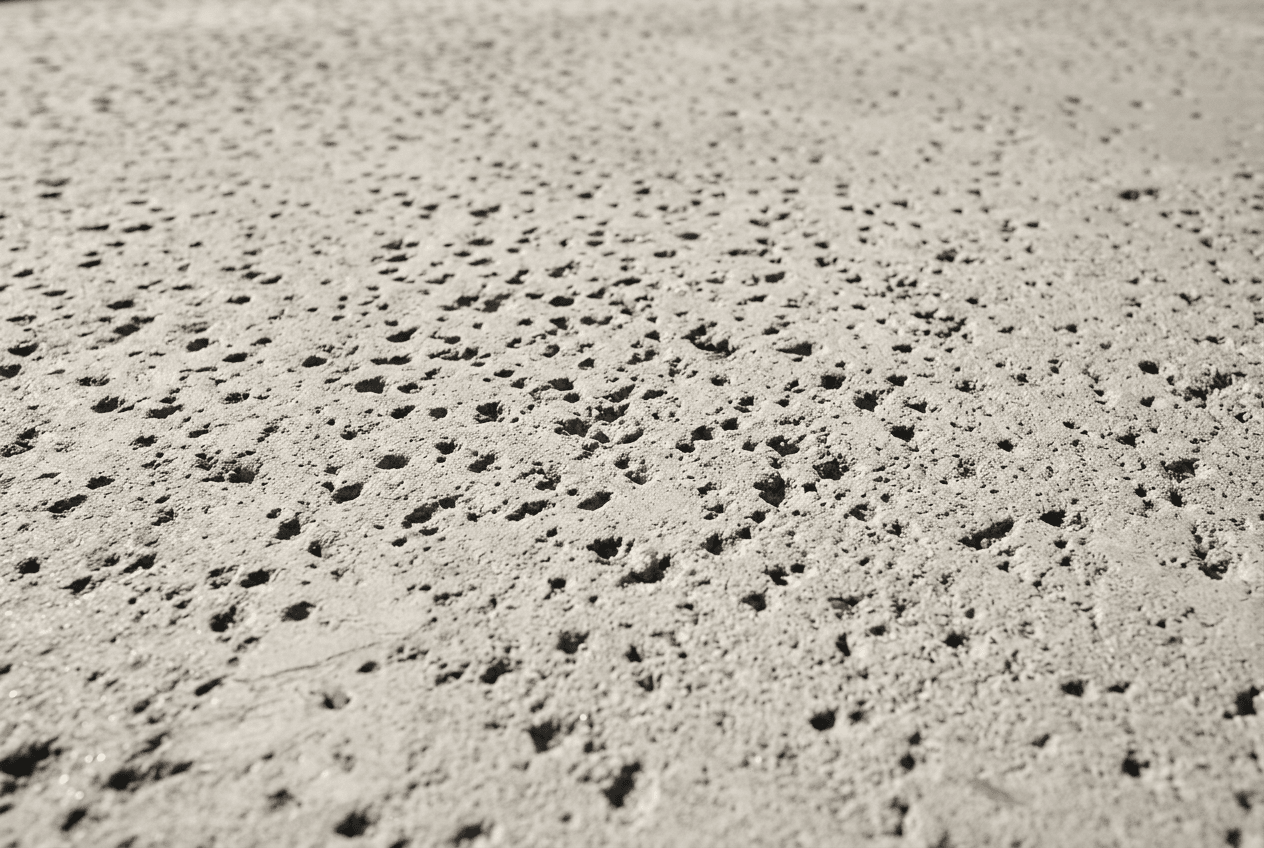
- 8. Integrally Colored Concrete
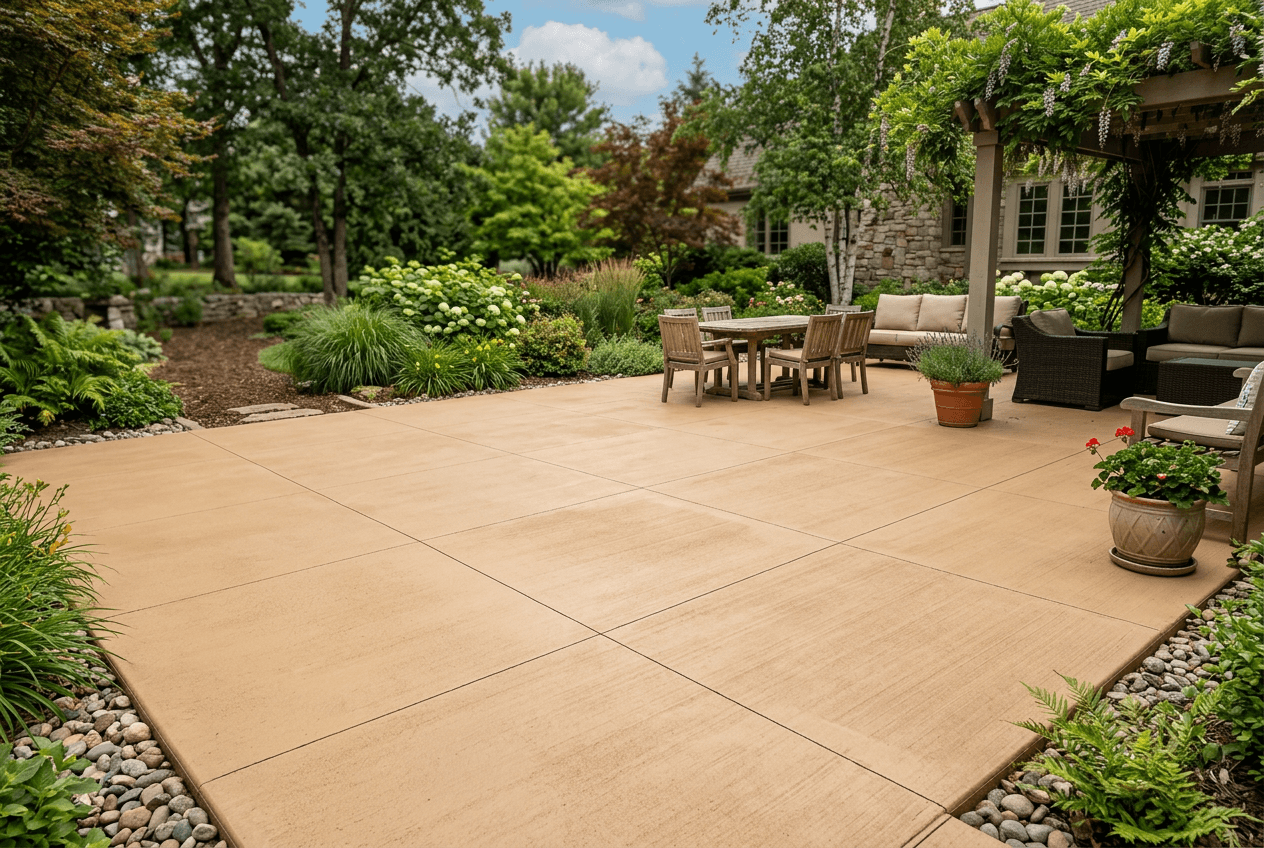
- 9. Sand-Finished Concrete
- 10. Saw-Cut Decorative Concrete
- 11. Decorative Concrete Overlays
- 12. Swirl-Finished Concrete
1. Broom-Finished Concrete
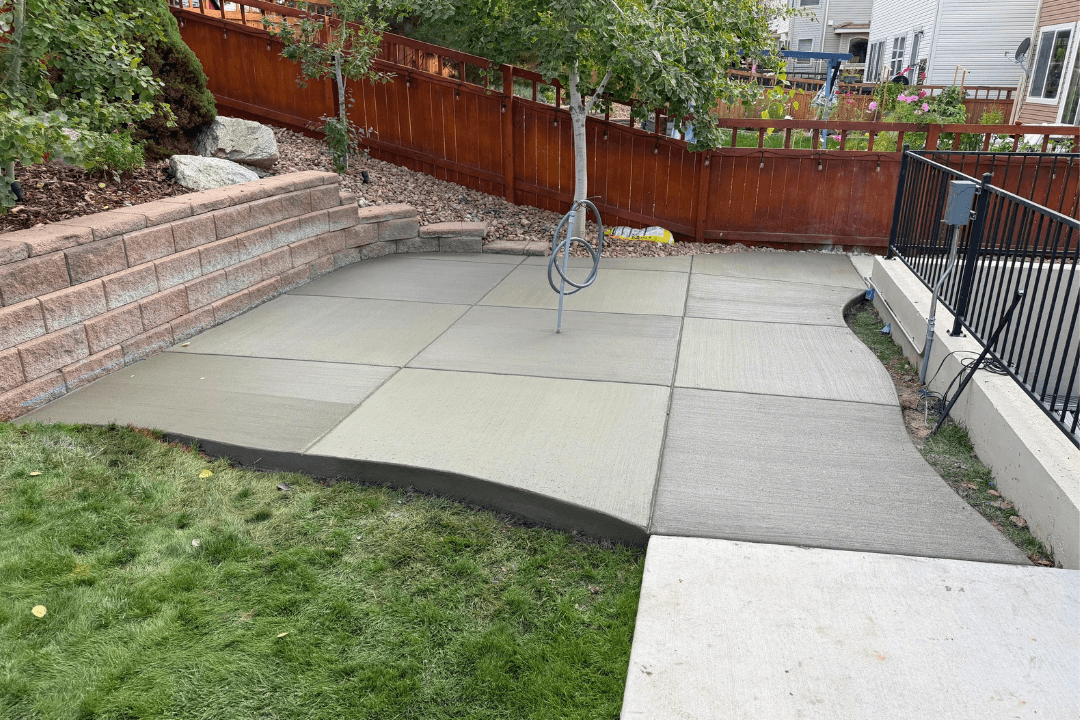
Broom finishing is the workhorse of residential concrete. After the slab is placed, screeded and floated, the finisher drags a stiff-bristled broom across the surface while it is still workable. The bristles leave fine parallel ridges that give the concrete its familiar textured look.
The depth of the texture can be adjusted. A light broom gives a cleaner look for patios, while a medium or heavier broom adds more grip for sloped driveways and walkways. The pad above, poured by our crew in Castle Rock, uses a standard broom finish with curved edges that follow the landscaping.
- Best for
- Driveways, sidewalks, walkways, patios, hot tub and shed pads, garage aprons
- Advantages
- Good traction, simple to install, easy to repair or match later, works on slopes
- Disadvantages
- Plain appearance; texture can wear smoother over many years of traffic
- Maintenance
- Periodic cleaning; a penetrating sealer every few years adds protection against moisture and deicers
- Cost vs. broom
- This is the baseline — typically among the most budget-friendly finishes
- Colorado weather
- Excellent when the concrete mix, air entrainment, drainage and curing are done right
2. Stamped Concrete
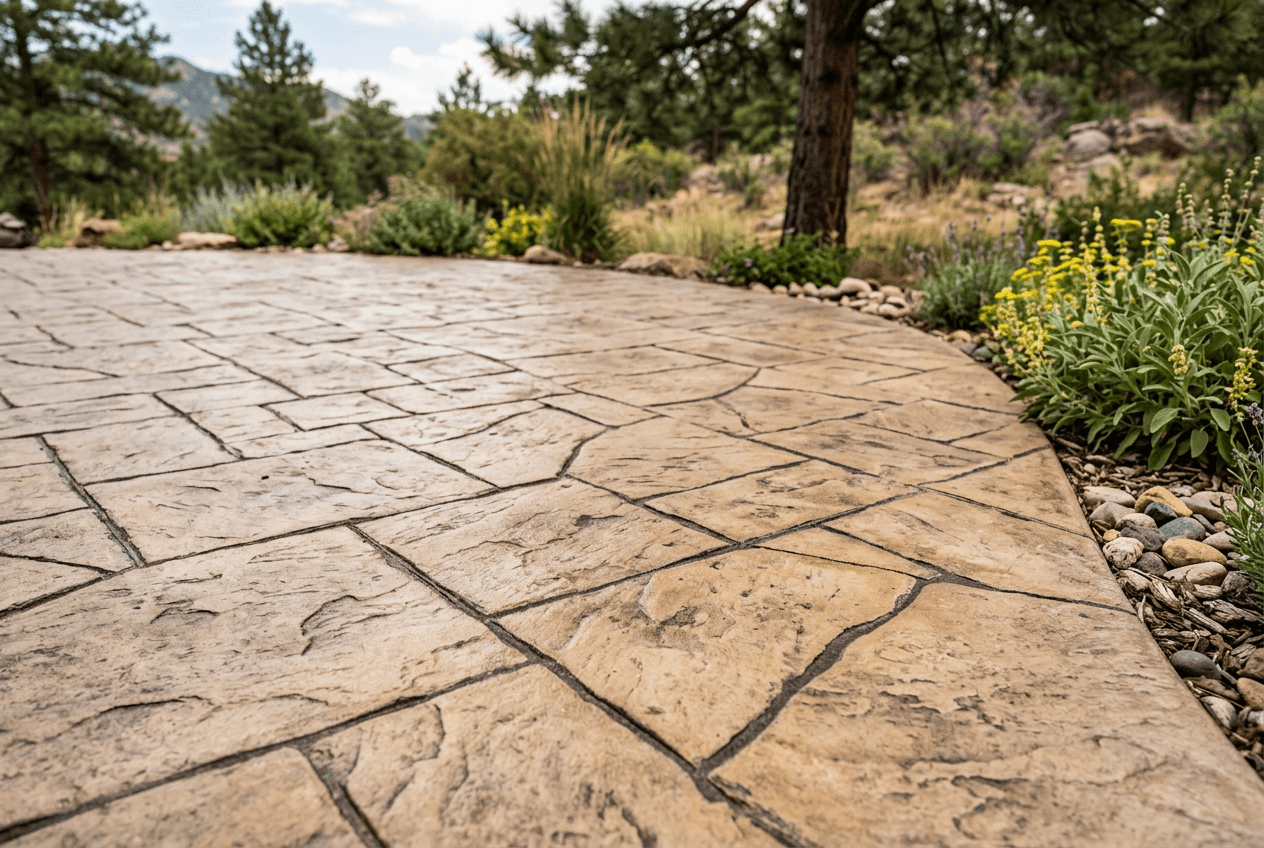
Stamped concrete imitates the look of stone, slate, brick, tile or wood. While the concrete is still plastic, the crew presses textured mats into the surface. Color is usually added with integral pigment, a broadcast color hardener, or both, and a contrasting release agent highlights the grout lines and texture.
Because stamping depends on timing — the mats have to go down within a narrow window — it is more labor-intensive than a broom finish. The result is one of the most popular ways to make a patio feel like an outdoor room. See our stamped concrete service page for more on patterns and colors.
- Best for
- Patios, pool surrounds, front entries, accent borders
- Advantages
- Looks like natural stone at a lower installed cost; many patterns and colors
- Disadvantages
- Smoother textures can be slick when sealed and wet; repairs are harder to blend
- Maintenance
- Clean and reseal every two to three years; ask about an anti-slip additive in the sealer
- Cost vs. broom
- Premium — added labor, color and sealing
- Colorado weather
- Good when properly installed and sealed; keeping the sealer maintained matters with freeze-thaw and deicers
3. Stained Concrete
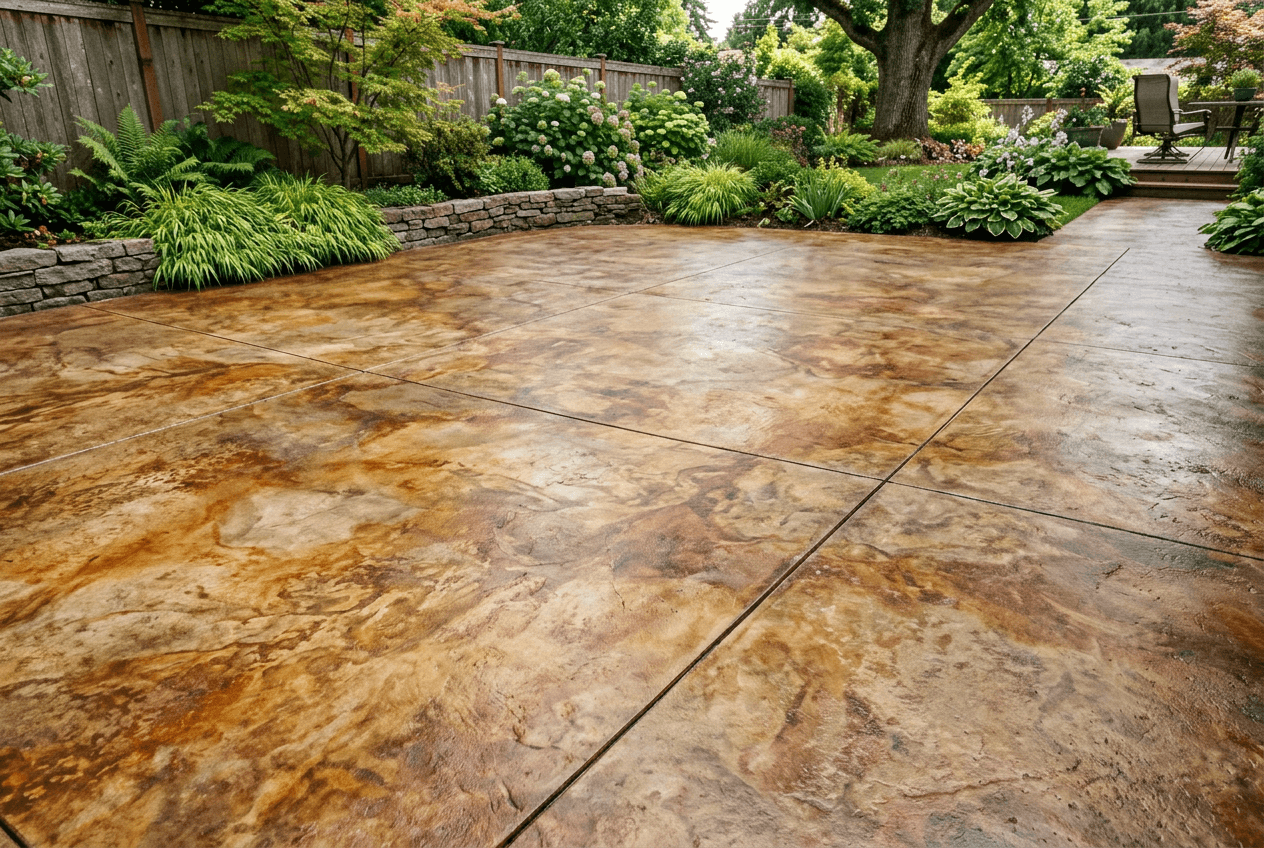
Staining is a coloring method, not a surface texture. Stain is applied to cured concrete — new or existing — and soaks into the surface rather than sitting on top like paint. Reactive (acid) stains chemically react with the concrete to create variegated, marbled earth tones. Water-based stains offer a wider color range and more predictable results.
Because stain only colors the surface, it can be combined with almost any texture: broom, smooth trowel, saw-cut patterns or stamped concrete.
- Best for
- Patios, covered porches, basements and other interior floors
- Advantages
- Rich, natural-looking color; can refresh existing concrete; works with many textures
- Disadvantages
- Results vary with the concrete; stains will not hide cracks, patches or blemishes
- Maintenance
- Needs a compatible sealer; reseal periodically outdoors as UV and traffic wear it
- Cost vs. broom
- Moderate — added cost on top of the base slab
- Colorado weather
- Good outdoors when sealed; choose a sealer with traction in mind
4. Polished Concrete
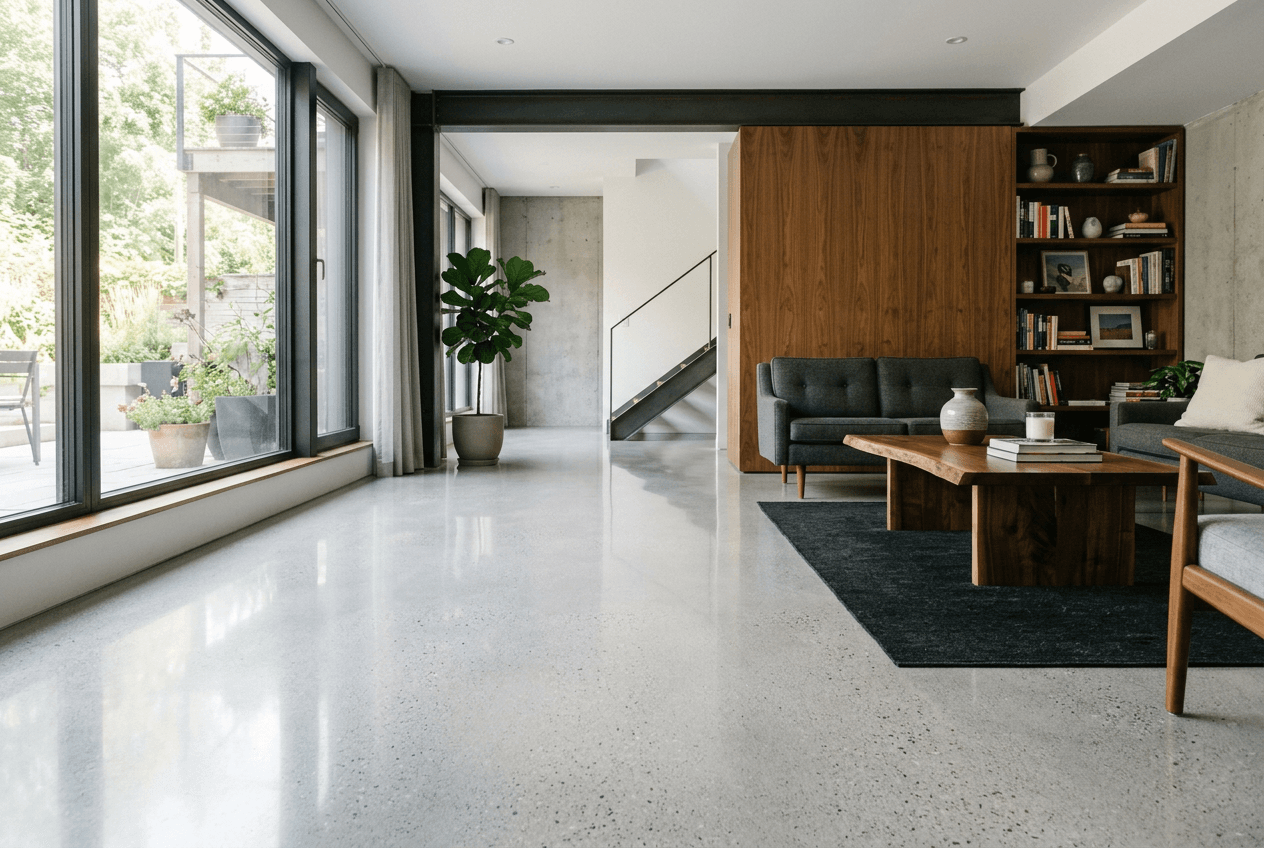
Polished concrete is created by grinding cured concrete with progressively finer diamond abrasives, usually with a chemical densifier applied along the way. The result ranges from a satin sheen to a high-gloss, mirror-like floor, with more or less of the aggregate exposed depending on how deeply it is ground.
Polished concrete is generally an interior finish. It can become slippery when wet, so it is not a good choice for outdoor walking surfaces like walkways, driveways or pool decks.
- Best for
- Basements, living spaces, shops and other interior floors
- Advantages
- Very durable and easy to clean indoors; modern look; no coating to peel
- Disadvantages
- Slippery when wet; specialized equipment; hard surface underfoot
- Maintenance
- Dust mopping and damp cleaning; occasional re-burnishing to restore shine
- Cost vs. broom
- Moderate to Premium, depending on the level of polish
- Colorado weather
- Not recommended for exterior surfaces exposed to snow, ice and rain
5. Exposed Aggregate Concrete
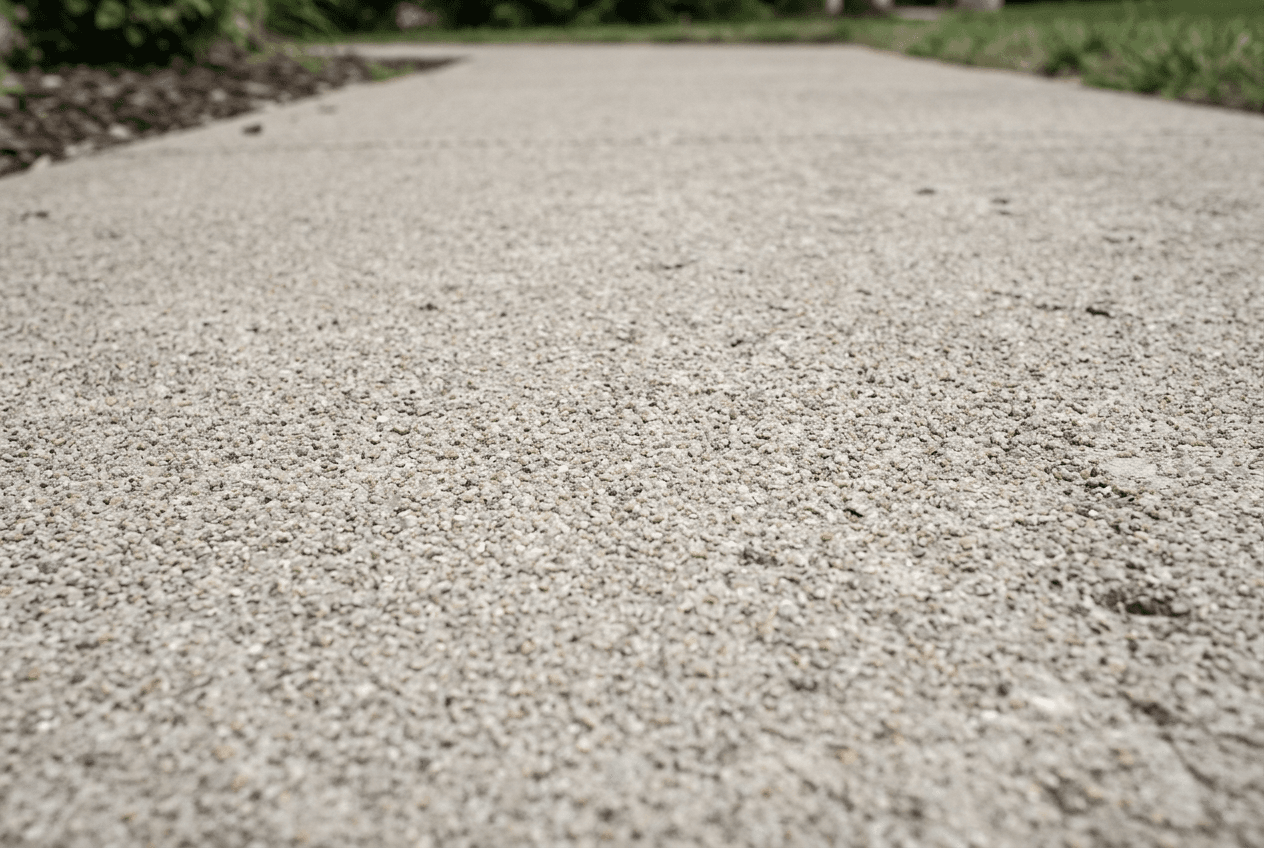
Exposed aggregate concrete removes the thin top layer of cement paste to reveal the stones in the mix. This is usually done by applying a surface retarder and washing the surface after the concrete sets, or by seeding decorative stone into the surface before exposing it.
The rough, pebbly texture provides strong traction, which makes it a practical decorative option for driveways and walkways.
- Best for
- Driveways, walkways, pool decks, patios
- Advantages
- Excellent traction; hides dirt and minor stains; natural stone look
- Disadvantages
- Rough on bare feet; poorly bonded stones can loosen; harder to patch invisibly
- Maintenance
- Rinse or sweep regularly; sealing helps lock in stones and color
- Cost vs. broom
- Moderate
- Colorado weather
- Excellent traction for snowy months when properly installed and sealed
6. Smooth Trowel-Finished Concrete
A smooth trowel finish is created by working the surface with steel hand trowels or a power trowel until it is dense, flat and smooth. It is the standard finish for garage floors, basement slabs and interior concrete that may later receive flooring, stain or polish.
That smooth surface is easy to sweep, but it can be slick when wet or icy. It is usually not the right choice for exterior walkways, steps or sloped driveways.
- Best for
- Garage floors, basements, shop and shed slabs, interior concrete
- Advantages
- Clean, flat and easy to sweep; good base for coatings and stain
- Disadvantages
- Low traction when wet or icy; shows trowel marks and blemishes
- Maintenance
- Sweeping and occasional cleaning; sealer or coating optional
- Cost vs. broom
- Budget-Friendly — similar to broom finishing
- Colorado weather
- Best kept indoors or under cover; limited for exposed outdoor walking surfaces
7. Salt-Finished Concrete
A salt finish is made by pressing coarse rock salt into the surface of fresh concrete, then washing the salt away after the concrete has hardened. The dissolved salt leaves a pattern of small, shallow pits that add subtle texture and some slip resistance.
Salt finishes are popular around pools in warm climates. In freeze-thaw climates like Colorado's, however, those little pits can hold water that freezes and expands, which can contribute to surface scaling. Many contractors advise against salt finishes for exterior concrete here.
- Best for
- Pool decks and patios in mild climates
- Advantages
- Subtle, soft texture; cooler-feeling than some decorative finishes
- Disadvantages
- Pits can trap water and dirt; vulnerable to freeze-thaw and deicer damage
- Maintenance
- Regular cleaning and sealing
- Cost vs. broom
- Moderate
- Colorado weather
- Poor fit for exposed exterior concrete in freeze-thaw conditions
8. Integrally Colored Concrete
Like staining, integral coloring is a coloring method rather than a texture. Pigment is mixed into the concrete before it is placed, so the color runs all the way through the slab. Chips and wear show less than with surface-only color.
Integral color pairs with broom, stamped, sand or exposed aggregate finishes. Earth tones like tan, buff and soft gray blend well with Colorado landscapes. Expect some natural variation between pours and with weather during placement.
- Best for
- Patios, walkways, driveways, stamped work
- Advantages
- Color through the full depth; softer look than plain gray; can reduce glare
- Disadvantages
- Color can vary between pours; patches are hard to match exactly
- Maintenance
- Sealing helps preserve color and resist deicers and stains
- Cost vs. broom
- Moderate — pigment adds material cost
- Colorado weather
- Good, with the same mix and curing requirements as standard concrete
9. Sand-Finished Concrete
A sand finish has a fine, sandpaper-like texture. It is typically created by lightly removing the surface paste to expose the fine sand in the mix, or by working sand into the surface during finishing.
It offers a clean, uniform look with more grip than a smooth trowel finish and a less pronounced texture than broom or exposed aggregate.
- Best for
- Walkways, patios, pool decks, entry areas
- Advantages
- Comfortable texture with good traction; subtle, even appearance
- Disadvantages
- Less dramatic than decorative finishes; technique varies by installer
- Maintenance
- Regular cleaning; sealing recommended for longevity
- Cost vs. broom
- Budget-Friendly to Moderate
- Colorado weather
- Good when properly cured and sealed
10. Saw-Cut Decorative Concrete
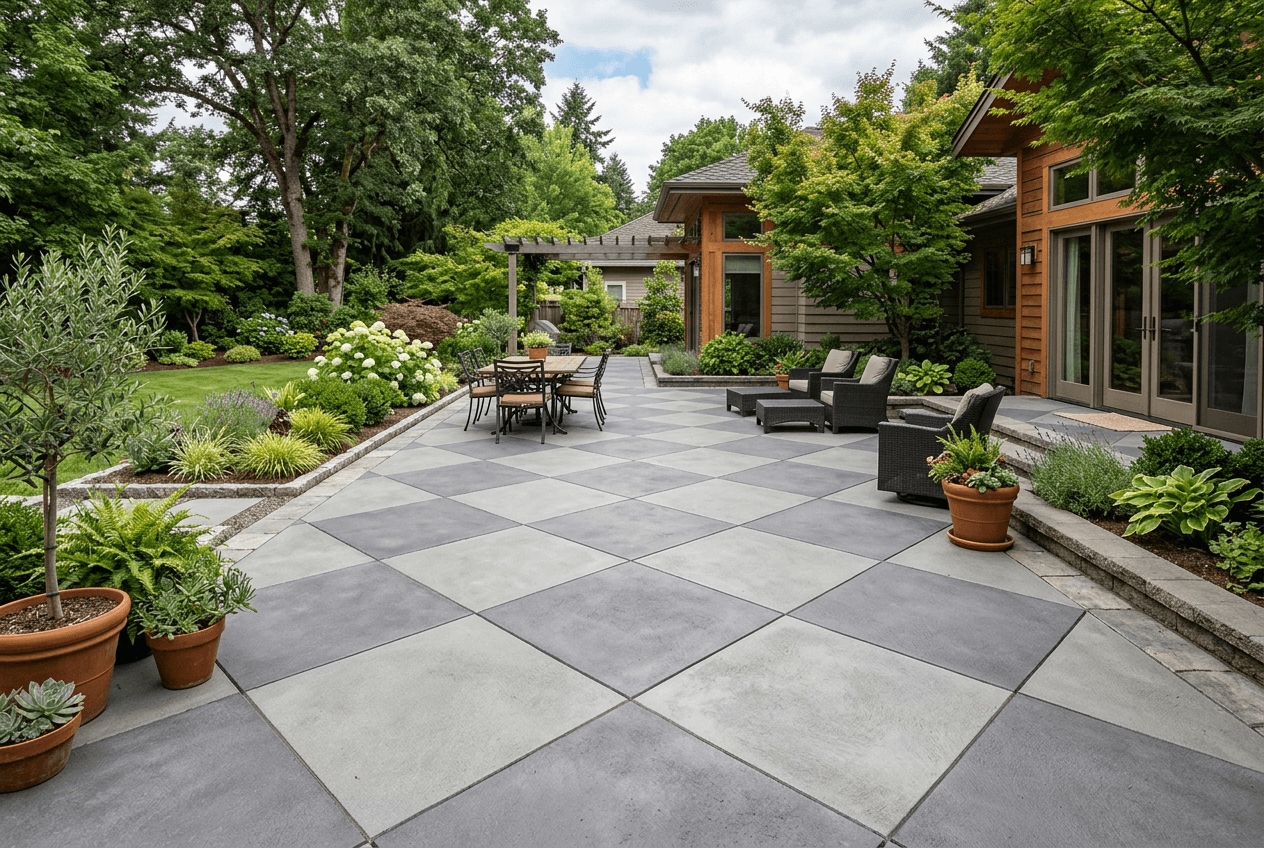
Saw-cutting is a decorative treatment that can be combined with other finishes. Every slab already needs control joints to manage where cracking occurs, and those joints are often saw-cut. Decorative saw-cutting goes further, scoring tile grids, diamonds, borders or custom designs into cured concrete.
Saw-cut patterns are often paired with stain or integral color to make each section look like a separate tile or stone.
- Best for
- Patios, porches, entries and interior floors
- Advantages
- Clean, tailored look; can be added to existing concrete; works with many finishes
- Disadvantages
- Cuts collect dirt; decorative cuts do not replace properly spaced control joints
- Maintenance
- Keep joints clean; reseal along with the rest of the surface
- Cost vs. broom
- Moderate — depends on pattern complexity
- Colorado weather
- Good when sealed; keep cuts clear of standing water
11. Decorative Concrete Overlays
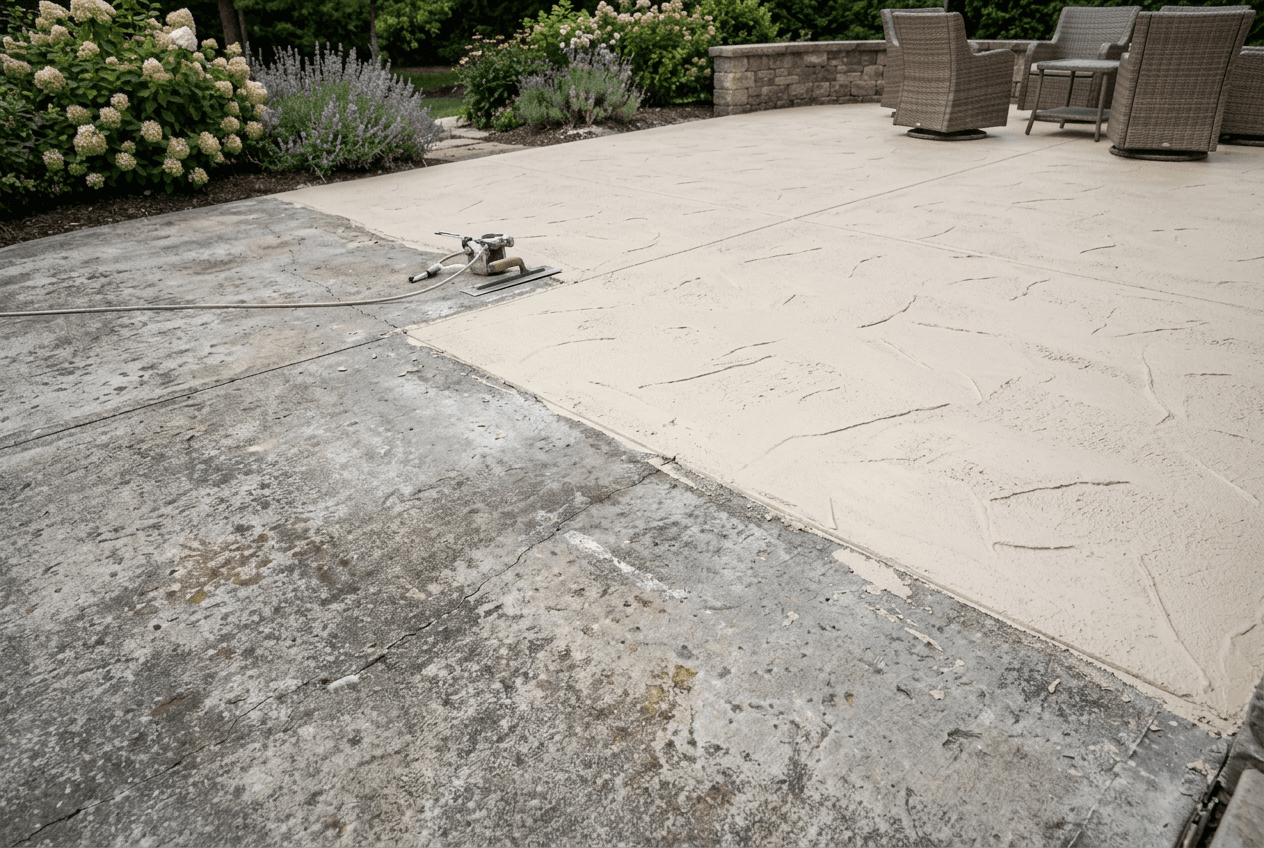
Overlays are separate resurfacing systems, not a finish applied to fresh concrete. A thin layer of polymer-modified cementitious material is bonded to existing concrete, then textured, stamped, stained or sprayed into a decorative finish.
Overlays can refresh worn or stained concrete that is still structurally sound. They will not fix settling, heaving or major structural cracks — if the slab underneath is failing, concrete removal and replacement may be the better long-term answer.
- Best for
- Refreshing sound but tired patios, porches, pool decks and interior floors
- Advantages
- Avoids full tear-out; many decorative options
- Disadvantages
- Only as good as the slab and prep underneath; can delaminate if poorly bonded
- Maintenance
- Periodic sealing; repair chips promptly
- Cost vs. broom
- Moderate to Premium
- Colorado weather
- Varies by product and preparation; choose systems rated for freeze-thaw exposure
12. Swirl-Finished Concrete
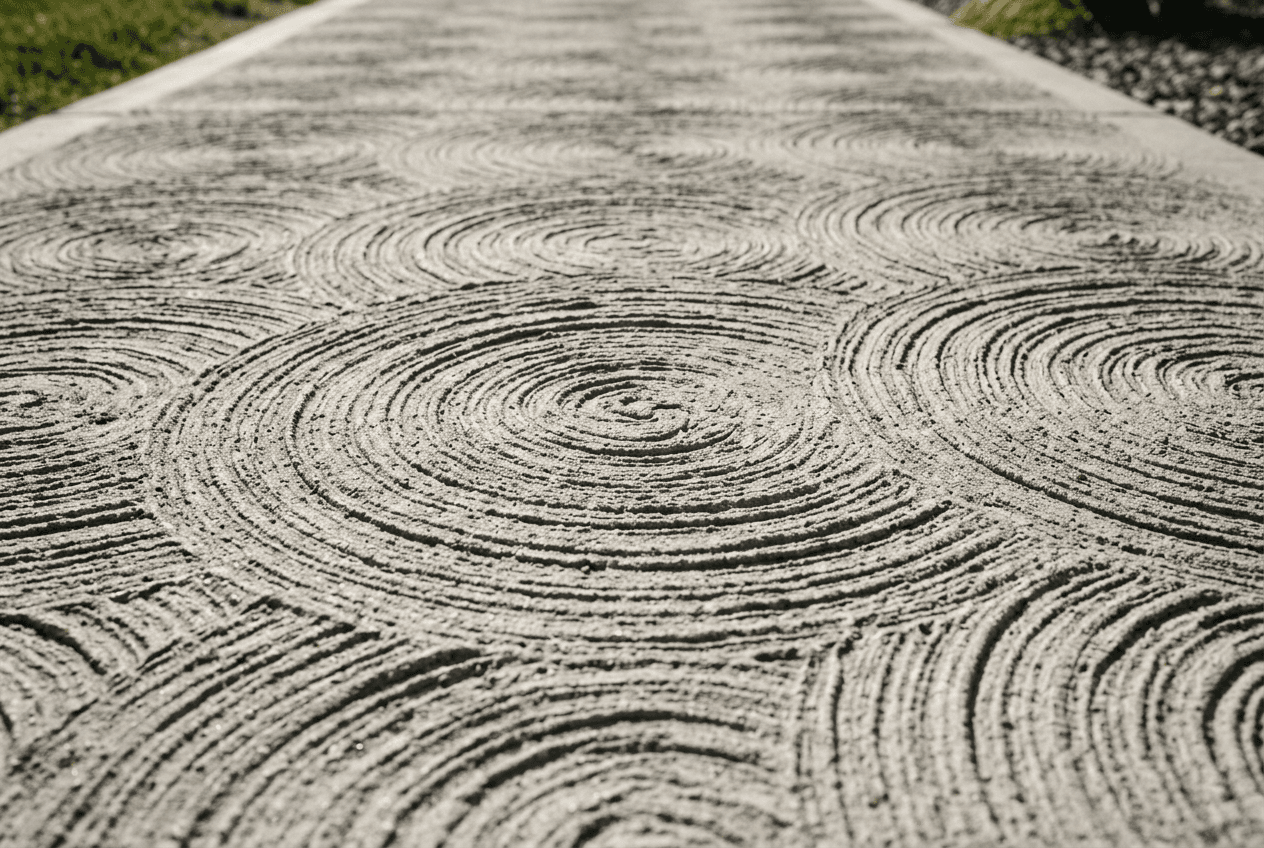
A swirl finish is created by moving a float or trowel in overlapping circular arcs across the surface as it sets. The pattern adds texture and traction while giving the concrete a softer, more handcrafted look than straight broom lines.
It is a simple, economical way to add character to walkways, pool decks and patios.
- Best for
- Walkways, patios, pool decks
- Advantages
- Good traction; distinctive look; little added material cost
- Disadvantages
- Consistency depends on the finisher's skill; not every installer offers it
- Maintenance
- Regular cleaning; sealer optional but helpful
- Cost vs. broom
- Budget-Friendly — similar to broom finishing
- Colorado weather
- Good, with the same mix and curing requirements as broom finishes
Concrete Finish Comparison Table
Use this table as a quick reference. Cost categories are relative to a standard broom-finished slab. Actual pricing depends on square footage, site preparation, demolition, project complexity, materials, sealers and installation requirements.
| Concrete finish | Appearance | Best applications | Relative cost | Maintenance level | Outdoor suitability |
|---|---|---|---|---|---|
| Broom-Finished Concrete | Fine parallel ridges, plain gray | Driveways, walkways, patios | Budget-Friendly | Low | Excellent |
| Stamped Concrete | Stone, slate, brick or wood patterns | Patios, entries, pool decks | Premium | Moderate | Good (sealed, with slip additive) |
| Stained Concrete | Translucent, variegated color | Patios, porches, interior floors | Moderate | Moderate | Good (sealed) |
| Polished Concrete | Satin to high-gloss, reflective | Interior floors | Moderate to Premium | Low (indoors) | Not recommended |
| Exposed Aggregate Concrete | Pebbly, natural stone texture | Driveways, walkways, pool decks | Moderate | Low to Moderate | Excellent |
| Smooth Trowel-Finished Concrete | Flat, dense, smooth gray | Garages, basements, interior slabs | Budget-Friendly | Low | Limited (slick when wet) |
| Salt-Finished Concrete | Speckled with small pits | Pool decks in mild climates | Moderate | Moderate | Poor in freeze-thaw areas |
| Integrally Colored Concrete | Uniform color through the slab | Patios, walkways, driveways | Moderate | Low to Moderate | Good |
| Sand-Finished Concrete | Fine, even, gritty texture | Walkways, patios, pool decks | Budget-Friendly to Moderate | Low | Good |
| Saw-Cut Decorative Concrete | Scored grids, tiles or borders | Patios, entries, interior floors | Moderate | Moderate | Good (sealed) |
| Decorative Concrete Overlays | Varies: stamped, knockdown, smooth | Resurfacing sound existing concrete | Moderate to Premium | Moderate | Varies by product and prep |
| Swirl-Finished Concrete | Overlapping circular arcs | Walkways, patios, pool decks | Budget-Friendly | Low | Good |
Swipe sideways to see all columns.
Best Concrete Finishes for Colorado Homes
Whatever finish you choose, Colorado concrete performs best when it starts with a good foundation: a compacted base, a properly air-entrained mix, slope for drainage, correctly spaced control joints, proper curing and a sealer that is compatible with the finish. No finish is completely slip-proof or maintenance-free, but these basics go a long way.
Driveways
A broom finish is the most common choice for concrete driveways because it offers dependable traction on slopes and in snow. Exposed aggregate is a popular decorative upgrade with similar grip. Textured decorative finishes, including some stamped patterns, can work on driveways, but very smooth stamp textures and glossy sealers can be slippery when wet or icy. Avoid smooth trowel and polished finishes on driveways.
Patios
Patios offer the most flexibility. Stamped concrete is a favorite for a stone or slate look, while a broom finish keeps things simple and economical. Integrally colored concrete, stain and saw-cut patterns add style without a full stamp. Explore options on our concrete patios page.
Walkways
For walkways and front entries, prioritize traction, drainage and durability, then appearance. Broom, sand, swirl and exposed aggregate finishes all provide good grip. Make sure walks slope away from the house and that sealers include a slip-resistant additive where needed.
Interior floors
Indoors, polished, stained and smooth-trowel finishes shine. They are easy to clean and pair well with radiant heat and modern design. Use rugs and mats near entries, since wet shoes can make smooth floors slippery.
Pool decks
Choose a pool deck finish for slip resistance and surface temperature first, not looks alone. Textured finishes, lighter colors and cool-deck-style coatings stay more comfortable under bare feet in summer sun. In Colorado, factor in freeze-thaw exposure too — which is why salt finishes are usually a poor fit here.
Which Concrete Finish Is Most Affordable?
Traditional broom-finished concrete is often among the more economical options. It uses standard materials, is finished with simple tools in a single visit, and doesn't need pigments, stamping mats or decorative sealers. Smooth trowel and swirl finishes are usually in a similar range.
Costs rise as finishes become more labor-intensive or require extra materials. Coloring (integral pigment or stain), stamping, decorative saw-cutting, additional surface preparation, multiple sealer coats and complex patterns all add time and cost. A plain broom slab with a stamped border is one way to add style while managing budget. The only way to know true cost is an on-site estimate based on your specific project.
Getting the Right Finish for Your Project
High Plains Concrete & Contracting installs concrete driveways, patios, stamped concrete, sidewalks and slabs for homeowners in Castle Rock, Parker, Highlands Ranch, Colorado Springs and surrounding communities. If your existing concrete is cracked, sunken or failing, we also handle concrete removal and replacement. We'll talk through which finishes suit your site, budget and Colorado weather — and be upfront about which ones we offer.
Frequently asked questions
What is the most durable concrete finish?
Durability depends more on the mix, base preparation, curing and sealing than on the finish itself. Outdoors, broom-finished and exposed aggregate concrete are known for holding up well. Indoors, polished concrete is very durable and resists wear.
Is stamped concrete more expensive than broom-finished concrete?
Yes. Stamped concrete requires added labor, color, release agents and sealer, so it typically costs more than a standard broom finish. The difference depends on pattern, color and project size.
Can existing concrete be stained?
Often, yes. Existing concrete can be stained if it is clean, sound and free of sealers, paint or coatings that block penetration. Stain won't hide cracks or patches, and results vary with the age and condition of the concrete.
Is polished concrete slippery?
Polished concrete has good traction when dry but can become slippery when wet. That's why it is generally recommended for interior spaces rather than outdoor walking surfaces.
What is the best concrete finish for a Colorado driveway?
A broom finish is the most common choice because it provides reliable traction in snow and on slopes. Exposed aggregate is a good decorative alternative. Either should be installed with an air-entrained mix, proper drainage and good curing to handle freeze-thaw cycles.
Does decorative concrete need to be sealed?
Most decorative concrete — stamped, stained, colored and exposed aggregate — benefits from sealing to protect color and resist moisture, deicers and stains. Exterior sealers usually need to be reapplied every few years.
Can you change the finish of existing concrete?
To a degree. Sound concrete can be stained, saw-cut, ground or resurfaced with a decorative overlay. If the slab is cracked, settled or failing, replacement is usually the better option.
Which concrete finishes are easiest to maintain?
Broom, smooth trowel (indoors), swirl and sand finishes are generally low-maintenance. Polished concrete is easy to care for indoors. Decorative finishes like stamped or stained concrete need periodic resealing. No finish is completely maintenance-free.
Ready to Upgrade Your Concrete?
Whether you're looking for a classic broom-finished driveway or a decorative stamped concrete patio, High Plains Concrete & Contracting can help you explore options for your project.