Why Concrete Driveways Crack in Castle Rock, Colorado (And How to Prevent It)
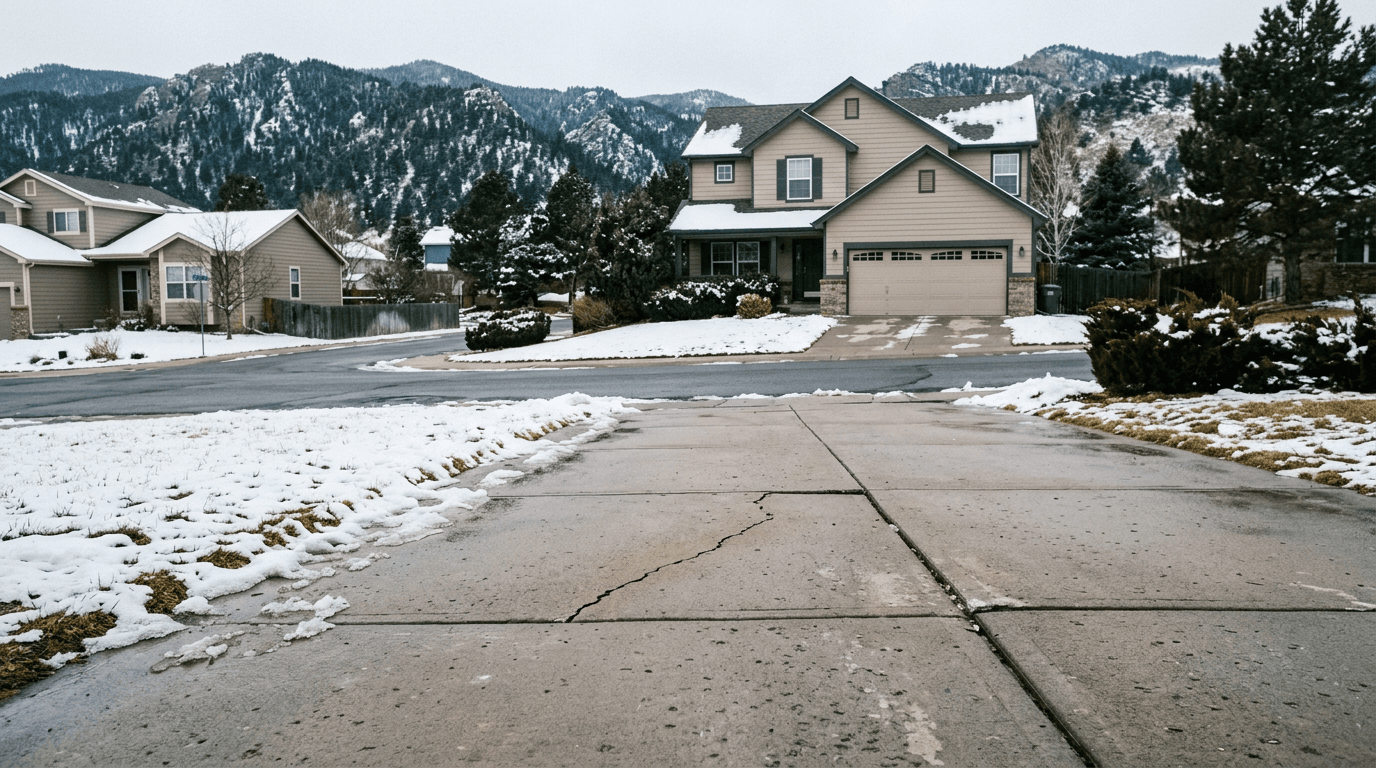
If you live in Castle Rock long enough, you'll notice it: driveways with a hairline crack running corner to corner, slabs that have dropped an inch at the garage, or a surface that's started flaking after a few winters. We look at a lot of cracked driveways around Douglas County, and the question homeowners ask is nearly always the same — why did this happen, and is it going to keep getting worse?
The short answer is that concrete is strong but not flexible, and our part of Colorado puts it through a lot. Weather, soil, drainage and how the driveway was built in the first place all play a role. Some cracking is normal. Wide, shifting or spreading cracks usually point to a problem you can do something about. Here's what's actually going on underneath.
1. Colorado's freeze-thaw cycles
Castle Rock sits at roughly 6,200 feet, and our winters rarely stay cold. It's common to see a sunny 45-degree afternoon followed by a night in the teens. Each of those swings is a freeze-thaw cycle, and a typical winter brings dozens of them.
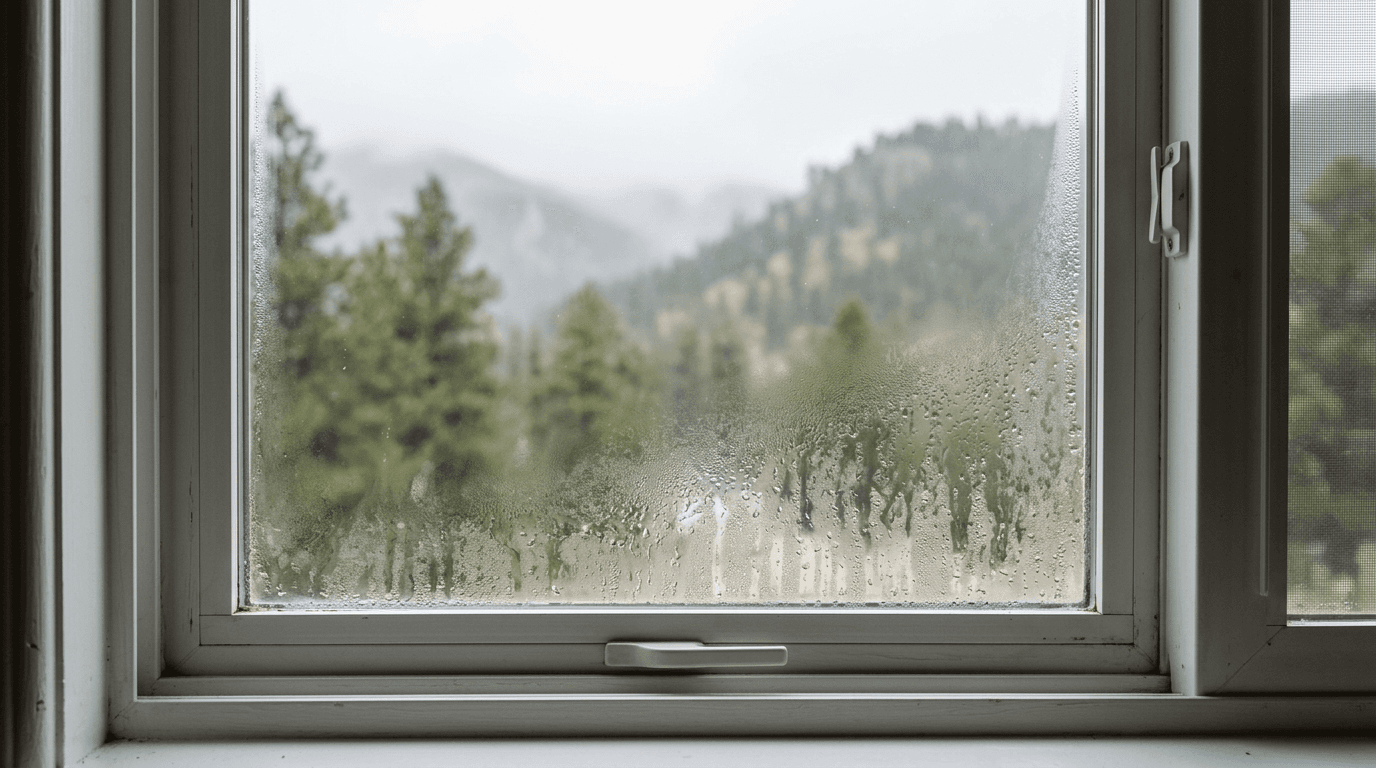
Here's why that matters. Concrete is slightly porous, and any existing crack is an open door for water. Snowmelt runs into those openings during the day, then freezes overnight. Water expands by about 9 percent when it turns to ice, so every freeze pushes the crack a little wider. When it thaws, more water gets in. Repeat that all winter and a tiny crack can turn into a broken edge or a spalled surface by spring.
Properly air-entrained concrete — a mix with microscopic air bubbles that give freezing water room to expand — holds up much better here. It's one of the first things we look at when we're pricing a new driveway for a Front Range home.
2. Expansive soils around Castle Rock
Parts of Castle Rock and the surrounding area have clay-rich soils that swell when they get wet and shrink as they dry out. Not every property has this issue — soil conditions can change from one neighborhood, or even one lot, to the next — but where it's present, it's one of the biggest reasons slabs crack and move.
When the soil under one part of a driveway swells and the rest doesn't, the concrete gets pushed unevenly. It isn't designed to bend, so it cracks. Over time you may see one panel sitting higher or lower than the next, gaps opening at the garage apron, or a trip edge on the walkway. Seasonal moisture changes — a wet spring after a dry winter, or a sprinkler system that soaks one side of the slab — make it worse.
You can't change the soil you're building on, but you can manage it. Good base preparation, keeping water away from the slab, and consistent moisture around the edges all reduce how much movement the concrete has to deal with.
3. Improper base preparation
If we had to name the single most common cause of driveway failure we see, it would be what's under the concrete, not the concrete itself. A driveway is only as stable as the base it sits on.
Before any concrete is poured, the subgrade should be excavated to the right depth, any soft or organic material removed, and a layer of suitable base material placed and compacted in lifts. The grade should also slope so water drains away from the house and off the slab. Skip or rush those steps and the base can settle unevenly once the driveway is carrying cars every day. The concrete above it loses support, and cracks follow.
This is also why patching a crack on top of a failing base rarely lasts. If the slab has sunk or the base has washed out, the real fix is either lifting and stabilizing the slab or removing it and rebuilding the base properly.
4. Why reinforcement and control joints matter
It's worth being honest about this: all concrete cracks eventually. As it cures, it shrinks slightly, and temperature changes cause it to expand and contract for its entire life. The goal of good construction isn't to prevent every crack — it's to control where cracks happen and keep them from spreading or separating.
Control joints are the straight grooves you see cut or tooled into a driveway at regular intervals. They create planned weak points, so when the concrete does crack, it tends to crack neatly inside the joint where you can't see it. Joints spaced too far apart, cut too shallow, or cut too late are a big reason driveways end up with random cracks running across the panels.
Reinforcement, such as rebar or welded wire placed correctly within the slab, helps hold cracked sections together so they don't drift apart or shift to different heights. It won't stop a crack from forming, but it does help keep a small crack from becoming a big problem. Thickness matters too — a driveway that carries vehicles needs more than a patio does.
5. Colorado deicing chemicals and winter maintenance
Deicers make winter safer, but some products are hard on concrete — especially in the first year, before the surface has fully matured. Salt-based deicers increase the number of freeze-thaw cycles at the surface, and certain chemicals, such as ammonium nitrate and ammonium sulfate, can attack the concrete directly. The result is scaling: the top layer flakes and pits, exposing the stone underneath. Salt and magnesium chloride tracked in on vehicles from treated roads can cause the same damage where you park.
A few simple habits go a long way:
- Avoid deicers on new concrete for at least the first winter. Use sand for traction instead.
- If you do use a deicer, choose one labeled safe for concrete and use only as much as you need.
- Shovel early and often so snow doesn't melt, soak in and refreeze.
- Rinse salt and road grime off the driveway during warmer winter days.
- Seal the surface with a quality penetrating sealer every few years to limit water absorption.
- Keep downspouts and sprinklers directing water away from the slab and its edges.
- Seal small cracks promptly so water can't get in and widen them.
When a crack needs professional attention
Thin hairline cracks that aren't moving are usually cosmetic. It's time to have someone take a look if a crack is wider than about a quarter inch, keeps getting longer, has one side higher than the other, or if a section of the driveway has sunk or is holding water. Those are signs the problem is in the base or soil, not just the surface.
Depending on what's causing it, the answer might be crack repair and sealing, lifting a settled slab back into place with polyurethane foam, or removing and replacing the damaged sections with a properly prepared base. A good contractor should explain which option fits your driveway and why — not just sell you the biggest job.
If your Castle Rock driveway is cracking, settling or flaking, we're happy to come out, take a look and give you a straight answer. High Plains Concrete & Contracting provides free estimates for driveway repair, replacement and new installation across Castle Rock, Parker, Highlands Ranch, Colorado Springs and the surrounding communities.
Ready to get started?
Get a free, zero-obligation quote from a licensed, family-owned Colorado contractor.